I wear a blue cloth coat as documented by Alfred Jacob Miller.
-
Join 56 other subscribers
-
Recent Posts
Archives
Categories
Contributors
Blogroll
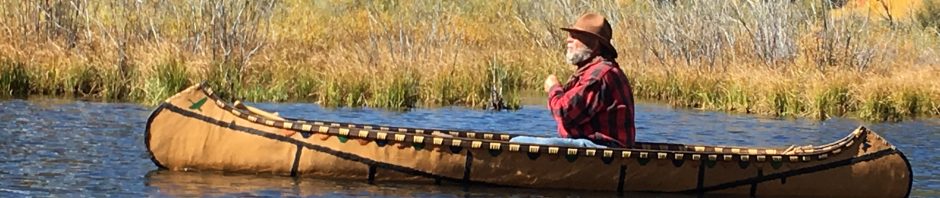
I wear a blue cloth coat as documented by Alfred Jacob Miller.


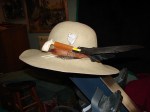
I wear a hat very much like Pierre’s hat. Pierre was a mule riding half breed with Stewart’s party to the 1837 rendezvous.


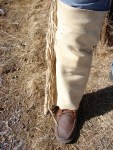
I recently completed some buckskin leggins. They are made from a brain tanned deer hide. They have a slightly greasy feel to them, so I did not add anything to them. I’m sure they will darken with use. I got the hide from Wade Wagner at Rocky Mountain Robes & Braintan. I made my fringes 6-7 inches long to match the description of P. L. Edwards, a layman in Jason Lee’s Missionary party. In his letter dated June 23, 1834 he describes the fringed leather clothing of the mountain men: “You will perhaps recollect to have seen in the “far west” of our own United States, the buckskin hunting shirt and leggins gracefully hung with fringes along the arms and sides. But I am sure you have never seen the tasty fashion of fringes carried to perfection. Here they are six to seven inches long, and hung densely on every seam, I believe, both of the hunting shirt and leggins.”(The Rocky Mountain Journal of William Marshall Anderson, pg. 32)


We had a great time at Bent’s this Christmas. I worked the carpenter’s shop during the day and stood guard duty on the front gate at night. We had some weather Friday night and Saturday, then it cleared off to below zero Saturday night. A great night for sleeping in the tent.

We live in what is rapidly becoming a smoke-free world. No smoking of cigarettes. No more smoke from power plants. Warnings from the State as to whether you can build a fire in your fireplace or not(blue days, red days). Even commercials for the new diesel powered cars that don’t smoke anymore. The adverse health affects of smoke are proven. Clean air is a good thing. Although today’s stringent rules are bordering on the insane, we all benefit from cleaner air. In a recent conversation about the smoky smell of brain tanned leather a friend made the following comments:
“I think the smoke smell that we all like so much would have caused comment among more civilized Anglo customers, but I don’t find those comments.(In his research,) I’d think they would have mentioned the smoke because it was exotic or because it was annoying. With whole armies clothed in leather breeches in the 18th Century, and cavalrymen in leather breeches and pantaloons through the Napoleonic Wars, if they were brained and smoked more people would have said something. Just like if we went to Ace Hardware and found work gloves made of smoked braintan, we’d comment.”
My reply follows:
“They probably didn’t remark about a smoke smell because every day life was filled with smoke. Exotic, no. Annoying, sure. Every dwelling would’ve had a fireplace or a stove. All cooking was done on wood fires. Outdoor fires would have been everywhere for everyday chores: heating water for clothes washing, scalding pigs, etc,etc,etc. I would think a wood fire and smoke smell would have been as common(and unrecorded) part of life as your daily bowel movement. For people living in the smoke, the smell would simply be part of life. As we have progressed our sensitivity to the smell of smoke has increased. The same for cigarettes. Did anyone preach against the evils of second hand smoke in the 1950’s? People were more used to it. As my great Grandfather used to say “You can get used to anything but a hanging.” When I was in Boy Scouts we would come home from our weekend camps and my Dad would say “You smell like an Indian”. To him, growing up on the Fond Du Lac Indian reservation in the 30’s & 40’s, all Indians smelled like smoke. Maybe the very refined of Europe had found some escape from smoke but it would be very few.”
Smoke was an everyday fact of life. Prior to the conversion to gas and electricity as means of heating and cooking, smoke from wood or coal was inescapable. The use of tobacco was prevalent. Candles and lanterns gave us our light after sunset. Think about it. Let me know what I have missed.
During an online chat about authentic clothing and gear, a friend of mine made a comment about your back story being an influence on your preferences for the type & style of the clothing and gear you use as a mountaineer.
Scott: “Your back story will help you choose your gear. Try to be consistent to time period and cultural background. Figure out what trade supply lines and Native sources mean within your back story. It’ll help you make simple choices like choosing between linen, cotton, wool, leather (and what kind), up to expensive choices like firearms. And you’ll never be done. You’ll never be done because conversations like we’ve been having online will introduce new angles and ideas into your head like earwigs and send you off on a new trail. That’s the great part about this!”
My reply follows.
Gabe: “Scott, I agree wholeheartedly! You must think about your back story. No one(with rare exception, ie. George Bent or Jean Baptiste Charbonneau to name a couple of possibilities) was born a Mountain Man. We all came from somewhere else. You would bring with you, your upbringing and family traditions at the very least. When Robert Campbell was introduced to Tom Fitzpatrick the man who introduced them said something like ” I imagine you two Irishmen want to sit and talk about old Ireland”. I’m sure men brought with them clothing and equipment from “back home”. When that wore out it had to be replaced. Some Mountaineers prided themselves in emulating the Indian tribes, others, I’m sure maintained their ethnic heritage. The white man was the ruler of the world and I would suspect many wanted to retain that status. To paraphrase Rex Allen Norman “even though the white man had his clothing provided to him by the Indians, he maintained the white man’s style so he would be recognized as a white man and not mistaken as someone from a rival tribe.”
I encourage you to develop your back story as part of your persona. We all came from somewhere. In the case of the Rocky Mountain men, we all came from somewhere else!
Years ago, when I was involved in the Great Lakes Fur trade I became very fond of my heavy cowhide moccasins. This type of moccasin was made in Montreal for use by the voyageurs. The cordonniers of Montreal also used this basis pattern to make a high top moccasin called souliers de boeuf. I have altered a set of my heavy cowhide Dyer brand moccasins to this style.

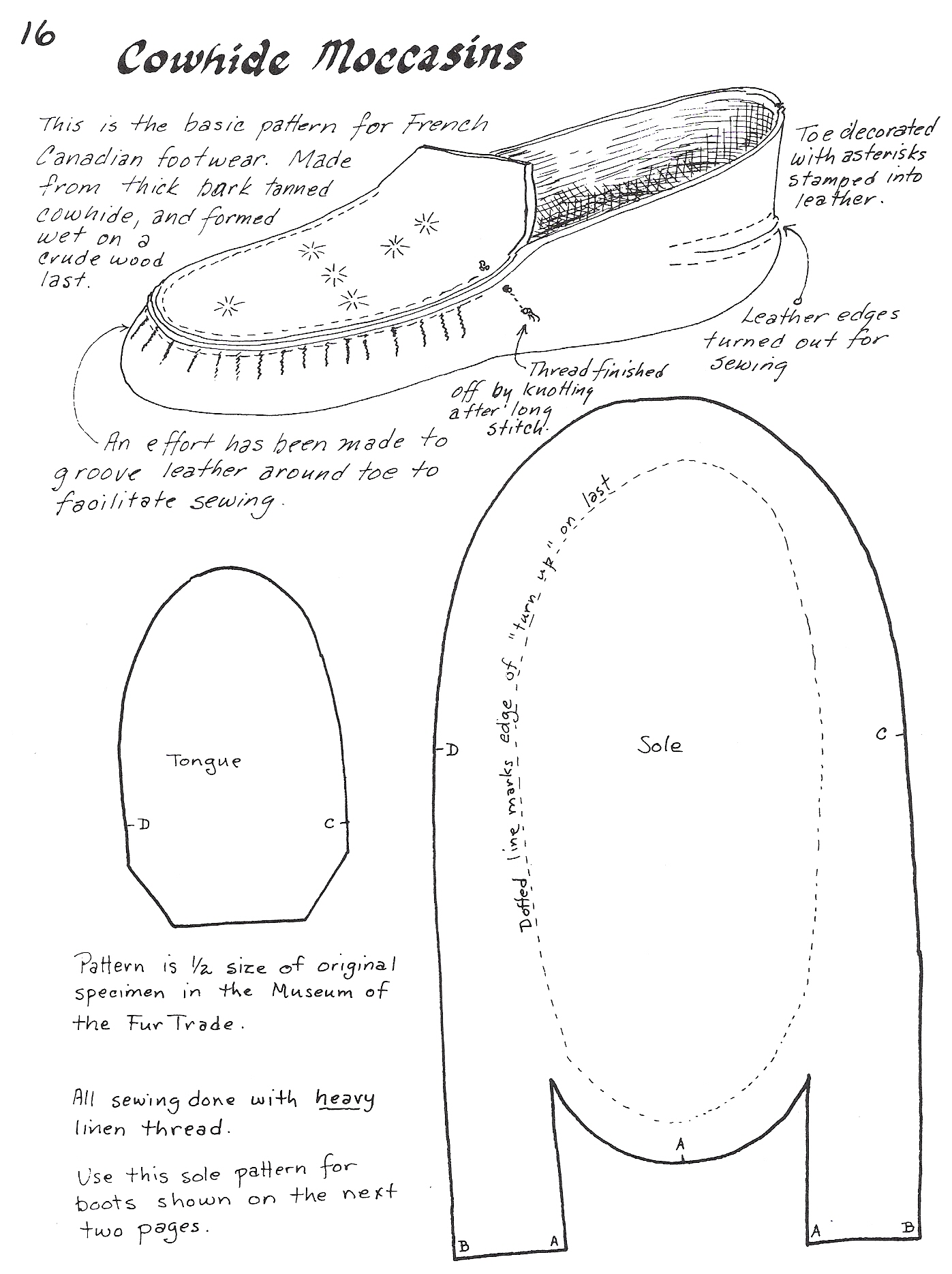

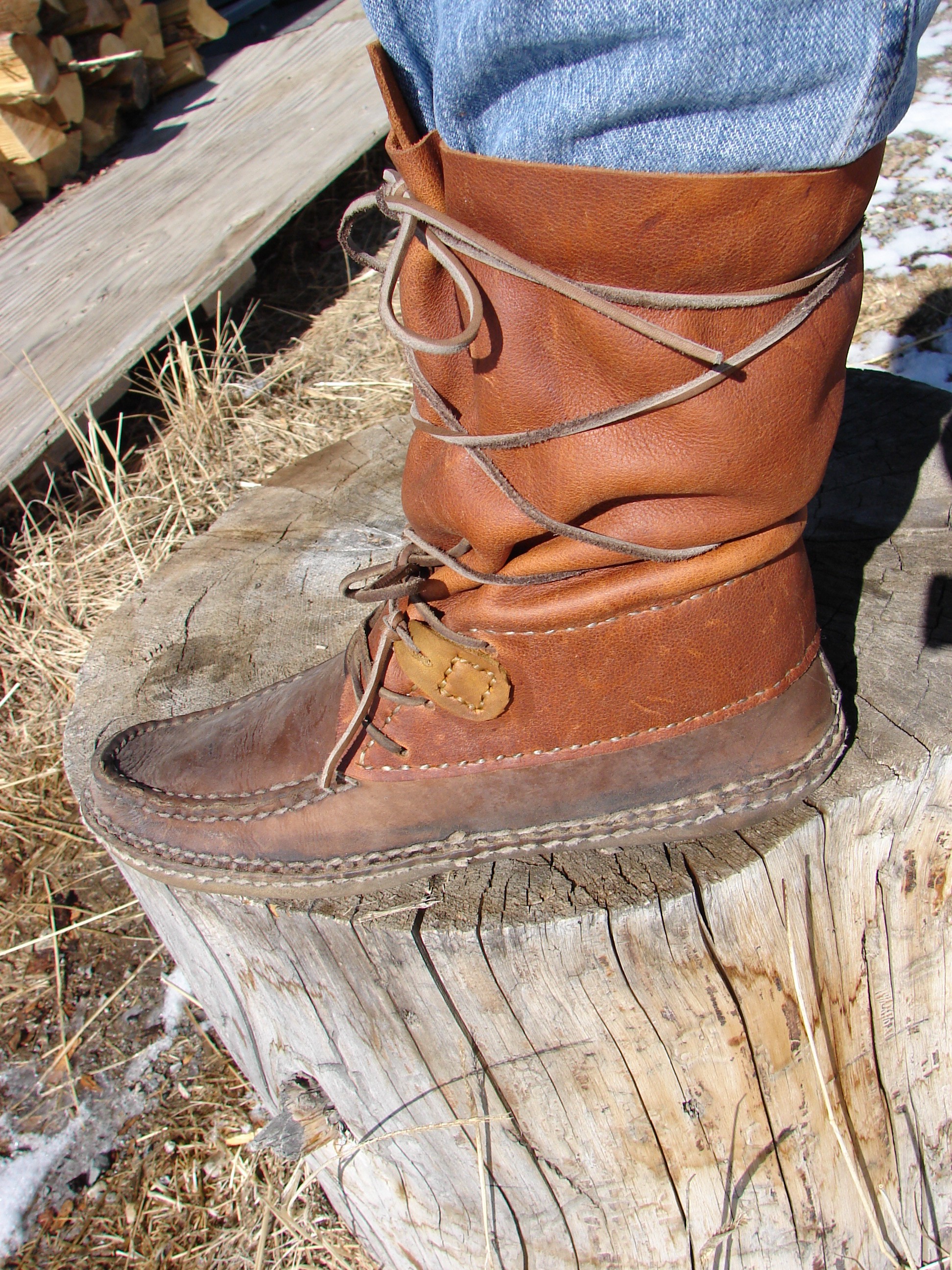
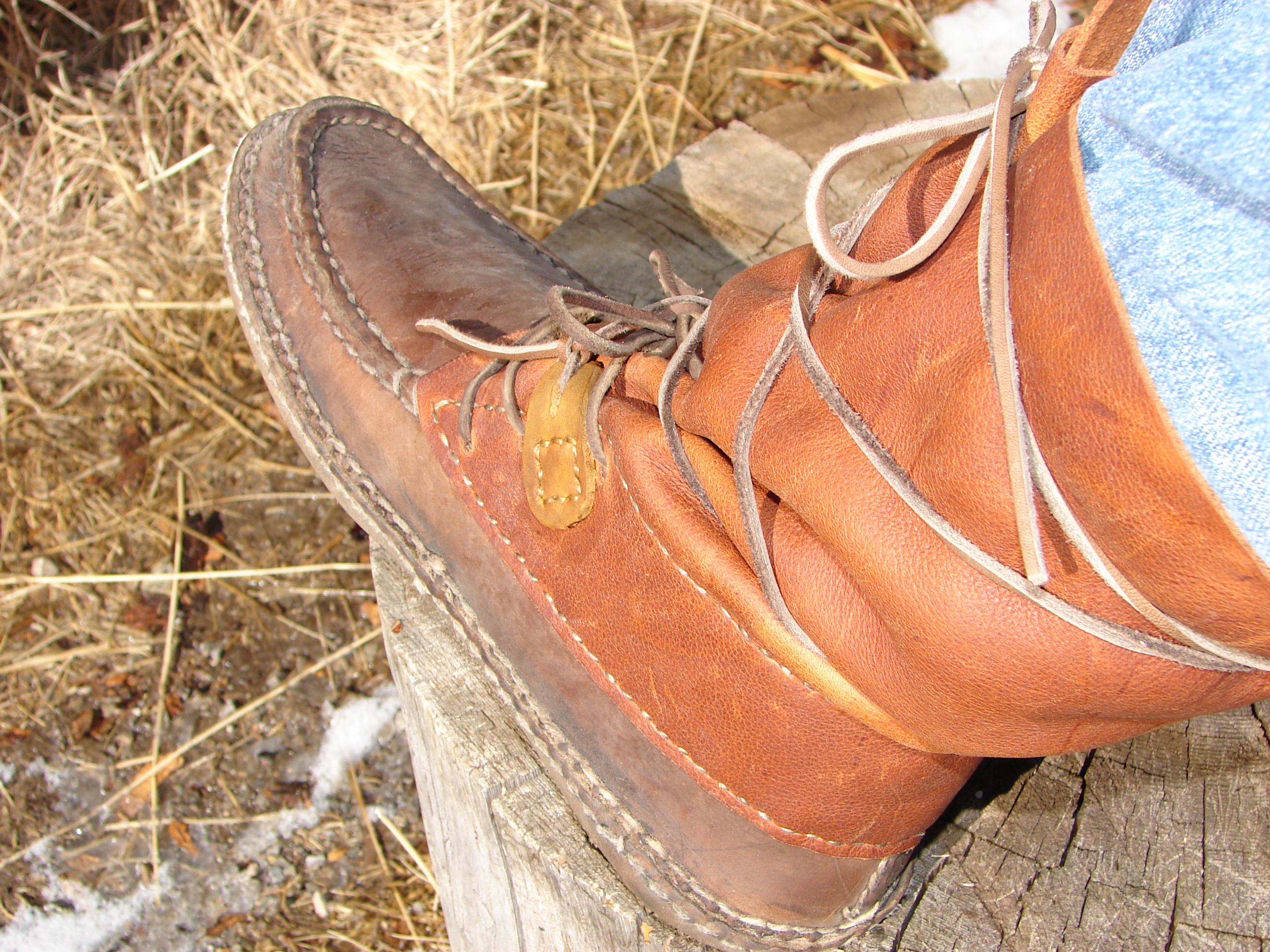
Reference: The Voyageurs Sketchbook. 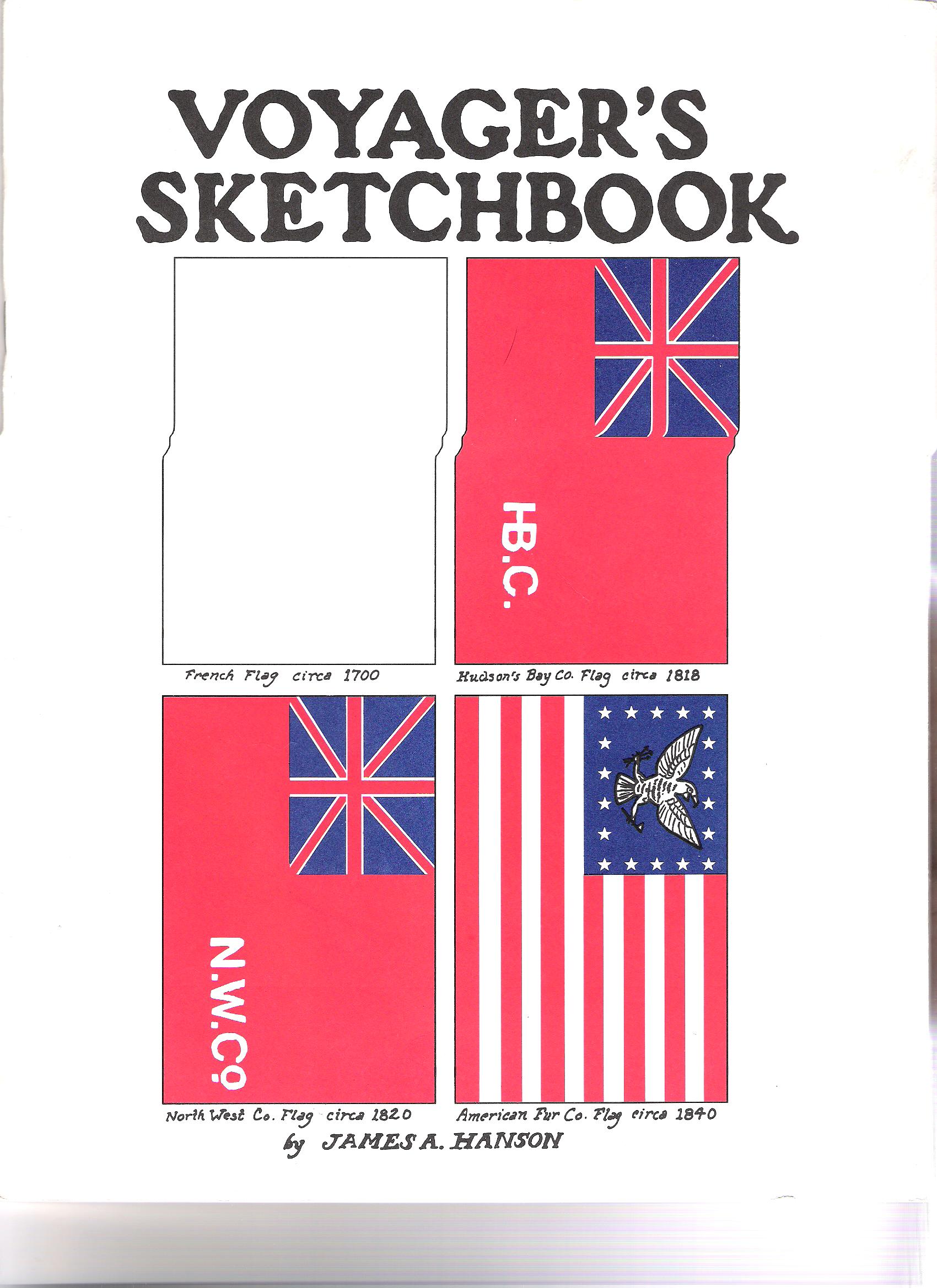
P.S. Alfred Jacob Miller portrays his subjects as wearing pucker toe or Ojibwa style moccasins. These were common in the Great Lakes area and parts east. According to the map on Nativetech.org [http://www.nativetech.org/clothing/moccasin/mocmap.html] pucker toe and center seam moccasins were used by the tribes in the north-east and south-east parts of North America, most tribes west of the Mississippi used a side seam or two piece with a hard sole. Rex Allen Norman in his 1837 sketchbook questions the depiction of pucker toe moccasins by Miller, as does Landry and Chronister in their article about mountain clothing from the Book of Buckskinning Vol.VII. From my study, I believe Miller shows the pucker toe because most of Stewart’s party were French-Canadians. Antoine, Pierre, Auguste and Jean are all described as being French-Canadians or Canadians. Being on a hunting excursion from St. Louis they may have brought clothing and gear from back home rather than trade from the Indians. Even if they had to make new moccasins while on the trip it is reasonable to assume they would follow the pattern of their existing items with which they were familiar and comfortable.
Here are a pair of side seam moccasins, I made recently. These were the most common style of moccasins in the Rocky Mountain west. Alfred Jacob Miller described the mountain men leaving rendezvous as having “twenty pairs of moccasins” packed in their gear. Over the course of a year, until the next rendezvous, that averages to less than three weeks of use per pair! I hope mine last a little longer than that.


P.S. Alfred Jacob Miller portrays his subjects as wearing pucker toe or Ojibwa style moccasins. These were common in the Great Lakes area and parts east. According to the map on Nativetech.org [http://www.nativetech.org/clothing/moccasin/mocmap.html] pucker toe and center seam moccasins were used by the tribes in the north-east and south-east parts of North America, most tribes west of the Mississippi used a side seam or two piece with a hard sole. Rex Allen Norman in his 1837 sketchbook questions the depiction of pucker toe moccasins by Miller, as does Landry and Chronister in their article about mountain clothing from the Book of Buckskinning Vol.VII. From my study, I believe Miller shows the pucker toe because most of Stewart’s party were French-Canadians. Antoine, Pierre, Auguste and Jean are all described as being French-Canadians or Canadians. Being on a hunting excursion from St. Louis they may have brought clothing and gear from back home rather than trade from the Indians. Even if they had to make new moccasins while on the trip it is reasonable to assume they would follow the pattern of their existing items with which they were familiar and comfortable.
If you were to get your moccasins from western Indian tribes you probably got side seams of this style or a two piece hard sole moccasin. Miller shows the side seam moccasin on an Indian in one of his paintings and shows a hard soled moccasins or boot in Plate 50 of “The West of Alfred Jacob Miller“.
This weekend I made myself a new bullet pouch. It is a two compartment pouch from the Mountain Man sketch book vol 2. The flap is covered with hair on bear hide as pictured in the sketchbook on Mariano Modena’s bag. I have attached a Buffalo horn powder horn and will use this as my big game hunting pouch.


 Gabe the Shootist
 Gabe the Shootist