One of the most famous of American dog men was George Armstrong Custer.
Custer found particular solace with the dogs. A border-line manic-depressive, Custer found that when he was manic, he could go riding and running with them, and when he was despondent, they were perfect company to lie down with. Custer did “lie down with dogs,” never once feeling a moment of shame as he cuddled up next to them, their large bodies wrapped around his to keep him warm on the cold Plains.
Custer’s dogs were greyhound crosses — what later came to be called the “American Staghound.” A Staghound, of course is simply a large American longdog — a cross between two sighthounds such as a Greyhound or Scottish Deerhound, though Borzoi, Saluki, Afghan, or Irish Wolf Hound could theoretically be crossed in there as well. Today, most American Staghounds are multi-generation Staghound crosses.
It’s possible that some of Custer’s dogs may have been lurchers. A lurcher is a cross between a sighthound (such as a Deerhound, Greyhound or Whippet) and a herding dog (such as a rough collie) or perhaps a larger terrier (such as an Airedale or Bedlington). If some of Custer’s dogs were lurchers, they are likely to have been Greyhound or Deerhounds crossed with a collie or some other large herding dog. Custer was running in the West where dogs were intact their whole lives, found their own mates, and designed themselves as Nature saw fit.
Custer’s first long dogs, acquired sometime after the end of the Civil War in 1866, were killed (one in a firearms mishap and the other — Blucher– in 1868 at the Battle of the Washita River against the Cheyenne). Custer got other dogs and always seemed to have four or five with him, including a pair that reportedly came from Queen Victoria through Lord Berkeley Paget, the man who supplied Custer (in 1869) with the revolver he used during the last stand at the Battle of the Little Bighorn.
The fate of Custer’s dogs after his demise at The Little Bighorn is not well documented. Dutch Salmon, who has looked into it, reports that: “One hound, ‘Cardigan’, went to a clergyman in Minneapolis, who later had the dog mounted on display in a public building.” Where he was remembered and awed over by school kids which is about as good as a dog can hope for after death. —————- Photo is of George A. Custer with the Sioux-Arikara warrior Bloody Knife (pointing) and the Crow warrior Curly (standing), with staghound and greyhound. Montana, Spring 1876.
This information was taken from several different sources with no clear attribution.
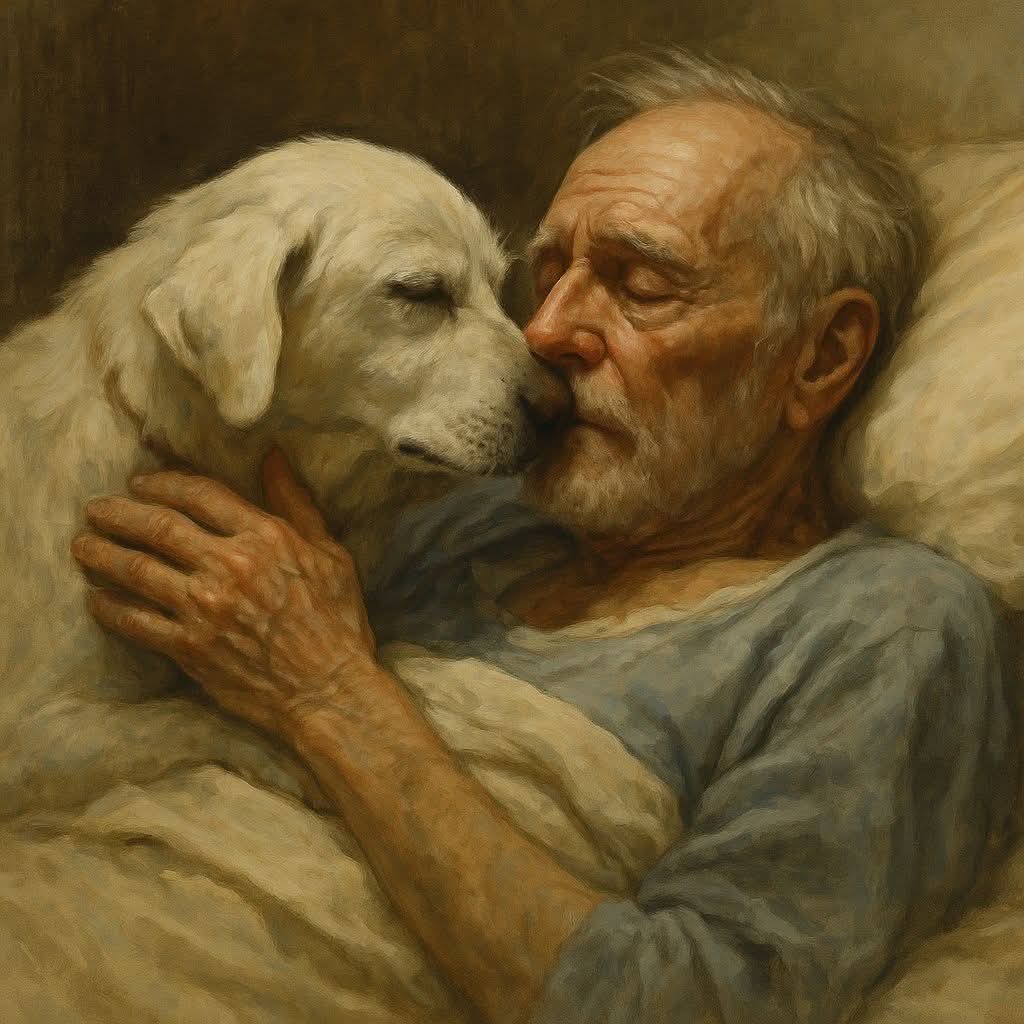
“Please, bring me my Whitey. I want to say goodbye… Don’t force him, just explain. He understands everything,” the father pleaded softly.
The son nodded and went to find the family’s old dog. Whitey, nearly blind and weary, had been his sick father’s only loyal companion. Two tired souls comforting each other, day after day. Now, it was time for a final farewell.
When the son returned, the father could barely lift his head. His trembling hands gripped the sheet as he whispered inaudible words. His eyes, full of pain and love, still searching for someone.
The son gently placed Whitey on the bed. “Say goodbye, Whitey…” he whispered, his voice breaking.
Whitey didn’t need words. He stepped forward, as if he could still see, and snuggled up against his beloved human’s face. “Whitey… my dear Whitey…” the father murmured with his last breath.
The dog nuzzled his nose against the fading warmth of his owner’s cheek. Real tears welled up in his cloudy eyes.
With a final effort, the father lifted a shaking hand and rested it on Whitey’s soft fur. His fingers barely moved, but the dog could feel it—all the love, warmth, and silent despair. He stayed there, close and still, as if he could hold back time.
The son watched, tears streaming down his face. He had never seen anything so heartbreakingly beautiful. Purest love filled the room.
“Thank you… for everything…” whispered the father, as his hand grew still. Whitey did not leave his side. He continued to hug his friend, as if he knew letting go would mean losing him forever.
Silence took over the room. Only the gentle sound of the dog’s whimpering remained, as if trying to hold on to the last thread of life.
The son sat beside the bed and covered his father’s cold hand with his own. “Dad… We’re here. You’re not alone.”
Whitey remained pressed against his human. His little heart was broken. Then he lifted his head and howled softly, mournfully, as if calling him back. As if begging him to return. Then, once more, Whitey nuzzled his father’s face, licked his eyelids, and curled up, trying to absorb all the pain and cold that nothing could stop.
“He’s gone now, Whitey…” the son whispered.
Minutes, hours passed. Time stood still. That night, the son realized that love can be so pure and true, it needs no words—no language could ever describe it.
When morning came, Whitey was still there, lying by his friend’s side. He had not abandoned him. He stood guard, protecting the last silence of his beloved human.
The son gently lifted the dog in his arms. Whitey sighed and lay still. His mission was complete. Until the end. Forever.
A pet’s love is truly one of the purest there is. They don’t speak with words, but you can feel everything in their gaze, in the way they wait for you, in how they curl up next to you whether you’re happy or broken inside.
Some say, “It’s just a dog, why so much love?” But it’s not just that. They’re part of your life, your story, your heart.
They are there when everyone else leaves. They sit with you in silence, in laughter, in tears. They don’t judge; they don’t fail you. They simply love.
So, hug your dog more. Cherish them always. Look into their eyes and say thank you. Because their love may not last forever… but it will live in your heart for a lifetime.
Mike was born in my camp, 300 miles above the great Victoria Falls in Africa. He was a mongrel but an aristocrat. For his mother was my purebred Irish terrier, Fanny, and his father an Airedale of unblemished pedigree, owned by the local Native Commissioner. His life was adventurous from the start. He was only five months old when he saw his sister knocked into the river by a crocodile’s tail and engulfed in cavernous jaws before she could regain the bank.
A month later he saw his brother killed by a black mamba when the reptile glided across the camp clearing, and the misguided puppy rushed out and seized it by the middle. Mike was rushing to support his brother when the toe of my boot hurled him out of danger, and before he regained his feet, my gun had blown the snake’s head off. Ten minutes later he saw his brother die. Then I took him by the neck and pointed to the squirming body of the snake while I gave him some advice he appeared to understand. His eyes undoubtedly interpreted the meaning of my gestures, and he never afterwards took liberties with snakes.
In many a moment of peril, later, he owed his life to that same rare speed of intuition and an intelligence which seemed to enable him to classify each new danger as he met it.
He was six months old when I took him out for his first hunting lessons. I had noted that he inherited the Airedale’s gift for silence, as well as the build and color of his father. I taught him to crawl beside me when stalking game on all fours in the open, thus having him at hand without the risk of frightening the game away. That lesson was difficult, but he had learned it in a few months.
When he was nearly two years old I took him on his first long hunting trip. At our second camp he heard the thunderous tones of a lion at close quarters for the first time.
Attracted by the smell of meat in the camp, the royal killer came within a hundred yards before his vibrating roar stilled the native chatter and made every hair on Mike’s spine stiffen with anger. Then doubt seemed to assail him and he crept into the doorway of my tent, growling softly as he stared into the dark bush. I drove the beast off with a couple of shots and then told Mike that the fellow with the big voice was a bit outside his fighting weight. He had been a little scared and my pat on the shoulder seemed to comfort him. I judged he would take no chances and left him on guard, taking his excitable mother into the tent.
Some time after midnight a hyena sneaked towards the native bivouac, and Mike must have scented the brute and crept silently forward to intercept him. A sudden yell of alarm awakened me, and I found that Mike had landed on the hyena’s back and bitten him when the beast was within six feet of my head man, Stephen.
Mike was still standing beside the Zulu when I reached the bivouac and was growling ferociously. Stephen explained the cause of the commotion and then said, “That hyena wanted flesh from my face, master, but Mike saved me from his jaws. Keep him in our tent, Nkose, for he has a Zulu heart and will fight any beast that walks. He is my little brother!” I knew that the friendship of the grim-faced Zulu might mean life for Mike if ever the need of his help arose. But I did not chain the dog, because I wanted him to learn by experience to avoid danger and develop discretion. So, I patted him and praised his vigilance, and his amber eyes looked the love and worship which only the undivided heart of a dog can feel for a man.
Soon afterwards we crossed the Quando river into Portuguese territory and, within a week of the crossing, Mike encountered a leopard for the first time. He had been lying across the door of my tent as usual when I went to sleep and must have scented the beast. But he was too late to save his mother. She had been asleep by the fire, about ten yards away, and had probably scented the leopard too for she was halfway to the tent when seized. At the anguished yelp, which awakened me, I rushed from the tent to see a spitting ball of fury contorting itself in an effort to reach the dog which clung to his rump.
For Mike had come to the defense of his mother and jumped to the rescue. He was hanging desperately to the leopard. One slash from those razor talons meant death, so I took the risk of hitting Mike and fired.
The spotted killer uttered a venomous snarl and before I could fire again made a scrambling rush for the bush. Mike had dropped from his quarters at my shot and was standing beside the limp form of his mother, which the leopard had dropped to meet his attack. I examined the dead body of Fanny and then warned Mike of the folly of pitting himself against such a killer while secretly paying tribute to his fearless heart.
Mike bristled with rage as though he understood my words, and looked savagely in the direction the leopard had taken. But in a few minutes, he came and sat beside me, and we kept watch together until dawn. Then we took the spoor of the badly wounded leopard, and after a mile it led into thick bush. The thicket was only about two hundred yards in circumference, so I decided to burn it.
Mike had already scented his enemy. but obeyed my order to lie down as the natives fired the bush. The sudden shout of a native was followed by the rush of the leopard from cover and, in spite of his wound he moved swiftly towards an adjacent tree. Before I could stop him, Mike shot in pursuit and, at the very foot of the tree, forced the leopard to turn at bay. But the striking paws drove the dog back and, as he jumped out of danger, the leopard leaped for the tree trunk.
He was perhaps six feet above ground when Mike jumped for him and fixed his teeth in a hind leg. The beast fell in a heap and only agility unusual for a dog enabled Mike to avoid the blow of a flensing paw. But he did not retreat far and showed obvious determination to hold the leopard until I could shoot. Because of his position I could not fire at once, and the leopard lost no time in swarming aloft again. This time, Mike’s desperate leap enabled him to seize a hind foot; but the leopard clung firmly to the rough bark, while he spat and snarled in hideous menace. He was kicking fiercely to dislodge the dog when my bullet cut short his snarls and his career, bringing him to the ground almost on top of Mike.
The dog was up instantly, and when we reached the pair, he was stalking stiff-legged round the body of the leopard. Bristling with anger and growling deep in his throat, he looked so comical that some of the natives laughed. They were instantly cuffed by the heavy hand of Stephen, as he said, “You laugh, you hyenas! But the dog fought the leopard while your bellies shook with fear! It is his kill. And at the triumph of a warrior, such as you may not laugh!”
I knew then that, to Stephen, Mike was more than a dog. A month later he strengthened that impression when we were deep in elephant country. When we first found the great spoors, I left Mike in camp, knowing that he could be of little use against the great beasts and might get hurt or killed. But the reproach in his eyes and the heartbreak in the howl which followed me haunted me all that day.
The next day I took him with me. I soon found that elephant spoors did not interest him, but he grew vastly excited over tracks of antelope and bush-pig and seemed puzzled when I refused to turn aside for them. His obedience to my command to follow was apathetic and I guessed that he considered the hunt a poor one. Soon after noon we sighted the elephants resting in the bush and I signaled the natives to lie down. Then I went ahead with Stephen and Mike, crept quietly within thirty yards of a big bull, and fired.
I think the trumpeting which followed and the crash of the stampeding herd must have scared Mike. I found him crouching against my legs with his tail between his own as I fired again. Immediately afterwards I heard a smashing of bushes behind me and turned to see a big bull with trunk curled for action, storming towards me. This beast had remained hidden and was now following the herd, but with an obvious intention to wreak vengeance on anything between him and them.
To my anxious surprise, my little pal who had seemed so badly scared rushed to meet the monster, with what intention only he could tell! But as he came within ten paces of the bull, the great trunk uncoiled to strike him. That was too much for even his stout heart, and with a pathetic growl of defiance he fled. Yet by his action he probably saved me. For the bull heard his growl and stopped, detected the dog and swerved after him. He thus presented his side to me and gave me an easy brain shot which I took advantage of. The bull collapsed within a few yards of Mike, but when I called the dog he crept into cover and refused to come to me. Thinking him scared, I repeated my calls and went towards him, until at last he crept to my feet and lay with head on paws.
He bore no resemblance to the dog which had stalked so proudly round the leopard’s body and, gradually, I realized that shame-and not fear-possessed him. No brave man-yielding to a sudden impulse of fear-could have exhibited more certainly the shame such men feel at a momentary lapse of courage, save in actual words.
To encourage Mike, I praised him and gave him to understand that I was pleased with his behavior. Yet he remained very subdued all that day, and several times that night he awoke with a frightened yelp-no doubt dreaming of those colossal legs racing towards him. But Stephen was elated with the courage of his “little brother.” “Mike will fight anything,” he said. “In him lives the spirit of a mighty hunter and warrior of my people. Do not ask me how I know. You will see that I am right!”
Within fifty miles of the home camp, I was walking ahead of the wagon with the dog, when Mike caught the scent of a lion. Growling a soft challenge, he stepped behind me and stared down the path we followed, so that I was not surprised to find further on, where the path took a sharp bend, a lion and two lionesses feeding on a kudu cow.
My rifle was ready and I dropped the big lion with a clean shot. While the lionesses stood irresolute, I shot one of them, and the other disappeared in a mighty bound for the bush. But the fallen lioness was up in an instant and making for a patch of bush about thirty yards distant, although she was obviously badly hurt. When I found that the lion was dead, I very unwisely followed the lioness.
I proceeded cautiously, but she must have been watching from cover, for before had gone fifteen yards she charged at surprising speed, plainly determined to kill. I fired swiftly, but at that moment her broken shoulder caused her to lurch and the bullet only scored a furrow down her back. I think it would have gone hard with me then, but for the love little Mike bore me.
Seeing the lioness menacing me at thirty yards’ distance he shot forward with a fury which almost matched that of his terrible foe. She checked to strike at his small body, but the vigilance he had learned in past encounters made him leap aside just in time. As the beast rushed past him towards me he jumped in again, to fix his teeth in her off quarter. Roaring with fury, she turned like an acrobat to destroy him and, as she did so, I made use of the time he had gained for me and fired again.
My bullet smashed through her heart and shoulders from a distance of only twenty feet, as Mike relaxed his grip and sprang clear. Then, for a few seconds, she tore up the earth convulsively with her talons before she died. Those same talons would assuredly have been tearing at my body, but for the respite Mike’s intervention had given me.
So I took him in my arms and thanked him, and he licked my face understandingly. Then he went to the dead lioness and sniffed her slowly and warily, as though still unconvinced that she was really harmless. We reached the Zambesi a few days later, to find that the story of Mike’s attack on the lioness was already known to the natives, and that he was a hero in the kraals. For to the natives, accustomed to mongrel lurchers educated from puppyhood in the “safety first” principle, Mike’s gallantry was more than amazing.
During the next two years he helped Stephen and me out of many a tight corner and, once or twice, we were able to repay him part of our debt when he got in a tight spot. But space does not permit a description of those events, and I can only relate here the story of his gallant end. This occurred when I was on the way to the diamond mines at Dundo, in Angola, with a herd of traded cattle. I crossed the cattle over the source of the Quando river and decided to rest them on the green vleis from which the river took its rise. I had learned from a Portuguese trader that game was scarce in the country ahead so, while the cattle rested, I turned back to the border of the Lomba forest, to kill and dry enough meat for the rest of the journey.
Knowing how bold the lions were in this uninhabited country I built large fires each evening and ordered the carriers to keep them going all night. But after a full feed of meat the natives preferred to sleep, and three nights of immunity increased their natural carelessness.
Just before dawn on the fifth morning, Mike’s deep growl aroused me. I was sleeping on the ground with the dog beside me and seized my rifle as I sat up. At the same moment an anguished scream was followed by a pandemonium of yells as firebrands hurtled through the air. Mike was growling fiercely, but his nose had warned him belatedly on this occasion. Two natives had been carried off from beside the dying fires and, when dawn came, I determined to avenge them.
The whole camp sallied forth on the spoor, and within a mile of the camp we found the skulls and feet of the victims. Some distance farther on we crossed a small stream, and a mile or two beyond that the great tracks led into an isolated kopje, well covered with bush. While I halted halfway up the hill, I sent the natives to climb in two parties to the top. There they were to close in and descend in an unbroken line towards me and Stephen, until their advance forced the lions to break cover. Mike stood just behind me, staring up the kopje, when a soft whistle sounded.
Two Natives above us were pointing to a mass of loose boulders about twenty yards above our heads, and I saw a yellow form creeping to my right. I moved a few yards to get a clear shot, when the head of a lioness rose from behind the rocks and looked straight down at us. I fired at the lion with steady aim, but the shot was hardly heard above the mighty roar which the lioness charged. The next moment Mike rushed to meet her, but with her eyes fixed on me she leapt clean over him.
Blind and deaf to all but necessity of stopping that daily rush, I sighted between the yellow eyes coming towards me. I fired almost as her weight hurled me downhill, away from those deadly claws. She died as she fell, although she still struck spasmodically as she slithered downhill. Then Stephen drove his assegai through her heart and Mike flew at her neck and hung there, neither realizing that they attacked a dead beast.
My bullet through lungs and spine had brought the lion slithering down, mortally wounded, on the very spot I had occupied when I fired at the lioness; but his furious eyes had seen Mike attack his dead mate. His paw struck out as his body came to rest against the boulder and ripped the dog’s side from thigh to shoulder. Knowing that the blow meant death to Mike, Stephen uttered a roar which matched the lion’s tones in fury, raised his dripping assegai and rove it through the struggling beast, as he stood above it, with a force which carried the spearhead clear though the tawny body.
Prevented from rising by his broken spine, the lion still struck savagely with all the force of the death agony, and the terrible claws tore all the sinews of the Zulu’s muscular thigh. He staggered and fell as I sent a bullet through the lion’s head, standing very close-because I was shaking like an aspen myself! I turned hastily to Stephen, not knowing then whether his wound was mortal or not, but he muttered as he bit back a groan, “Little brother has gone, master, but I have sent his slayer to join him in the world of shadows. Bring the dog close that I may tell him so!”
Then I found that Mike was not quite dead. My voice reached his failing senses, and the amber eyes opened and looked straight at me, while the pink tongue slid out as though to caress once more the hand which patted his head. I lifted him carefully and laid him close beside the Zulu, and Stephen raised his right arm in salute and uttered a sonorous “Bayete” Mike’s eyes flickered for a moment as though he recognized the royal salute, then closed in death.
Stephan insisted on being carried down the kopje at once and after I had attended to his injury, he talked long and earnestly to the natives. Afterwards he said to me: “I have ordered a grave for Mike, master, where he can sleep in peace and no evil beasts can disturb him. It will take one day to make. But as I cannot walk, I ask you to rest for that day.” By the next afternoon a mighty cairn of rocks had been raised above Mike’s grave.
I have owned many dogs since then, but none ever stirred my admiration as that one did although many were as brave and loyal as Mike. In a way Stephen was right in his idea that within Mike’s rough hide dwelt the spirit which had once been that of a human warrior as brave and loyal as he. For in understanding Mike outshone any dog I have known.
THE END
Illustration: The striking paws drove the dog back, and as he jumped out of danger, the leopard leaped for the tree trunk. c. 1950’s – Sam Savitt (Illustrator). Enhanced by The Vintage Airedale
William Sydney Chadwick (1882-?) Author was born in England and emigrated to South Africa in the 1920s. He was a transport rider in Rhodesia, one time member of the Bechuanaland Protectorate Police and professional hunter in that he earned a living selling the ivory and lions skins from his trophies.
Sam Savitt (1917 – 2000) was an equine artist, author, and teacher, as well as an illustrator of over 130 books, in addition to 16 that he wrote.
“My wife says I am eccentric. My friends say so too. And I suppose they are all quite right. But what if I am? I like being eccentric at times.
One of my habits, even to this day, when I get disgusted with the sight of too many people and the awful noise they make, is to jump into my car and drive away to some nearby jungle. There I will leave the car, wander off into the forest, make myself a nice large campfire as night approaches, and spend the hours of darkness just seated by the blaze. I throw fresh wood on the fire as occasion demands, having already gathered it before darkness fell. Eventually the supply of wood will give out, or I might feel sleepy. In either case there is only one thing to do. That is to go to sleep beside the fire. The embers will keep me warm when the chill and dewfall of early morning might otherwise prove uncomfortable. They will also protect me from elephants and snakes, the only creatures to be feared when no man-eaters are around. With daybreak I will go back to the car and come home and wonder why I did such a foolish and eccentric thing, and what I got out of it.
But I have done it, and will do it, again and again.
Other forms of this madness are to go out to the jungle on moonlit nights, and also on dark nights, and sit behind some tree, or on a rock, or beside a water hole, and just watch and listen.
Those who have had the good luck at any time to sit beside a camp fire, out in the wide open spaces, even where there was no danger from lurking animals or poisonous snakes, might be able to understand my fondness for this pastime. There is a pleasure that comes to one at such times that words cannot describe. It touches some hidden inner chord and sets one’s soul afire!
Perhaps it is on such occasions, and in such solitudes, that a man’s inner self comes into closest touch with the infinite. I feel very near indeed then to God, far closer than I can feel in any church where the padre, either on the basis of a monthly salary or other means of renumeration, automatically repeats words for the uplift of my erring and sinful self.
There is no place quite so suitable for a friendly talk as a camp fire. The red embers, the crackle of the flames, the occasional shower of sparks as a fresh piece of wood is thrown into the blaze, the acrid smell of smoke that curls upward in a spiral to the sky above – all these help to give one the feeling of being at home with oneself, with Nature, and with God.”
This follow-up has been a long time coming. I shot the round ball loads in my semi-auto shotgun and although they function just fine, I was not thrilled with the accuracy. At 25 yards, I was getting 5″ – 6″ groups. Without a choke, I’m afraid there was too much space in the bore to be very consistent.
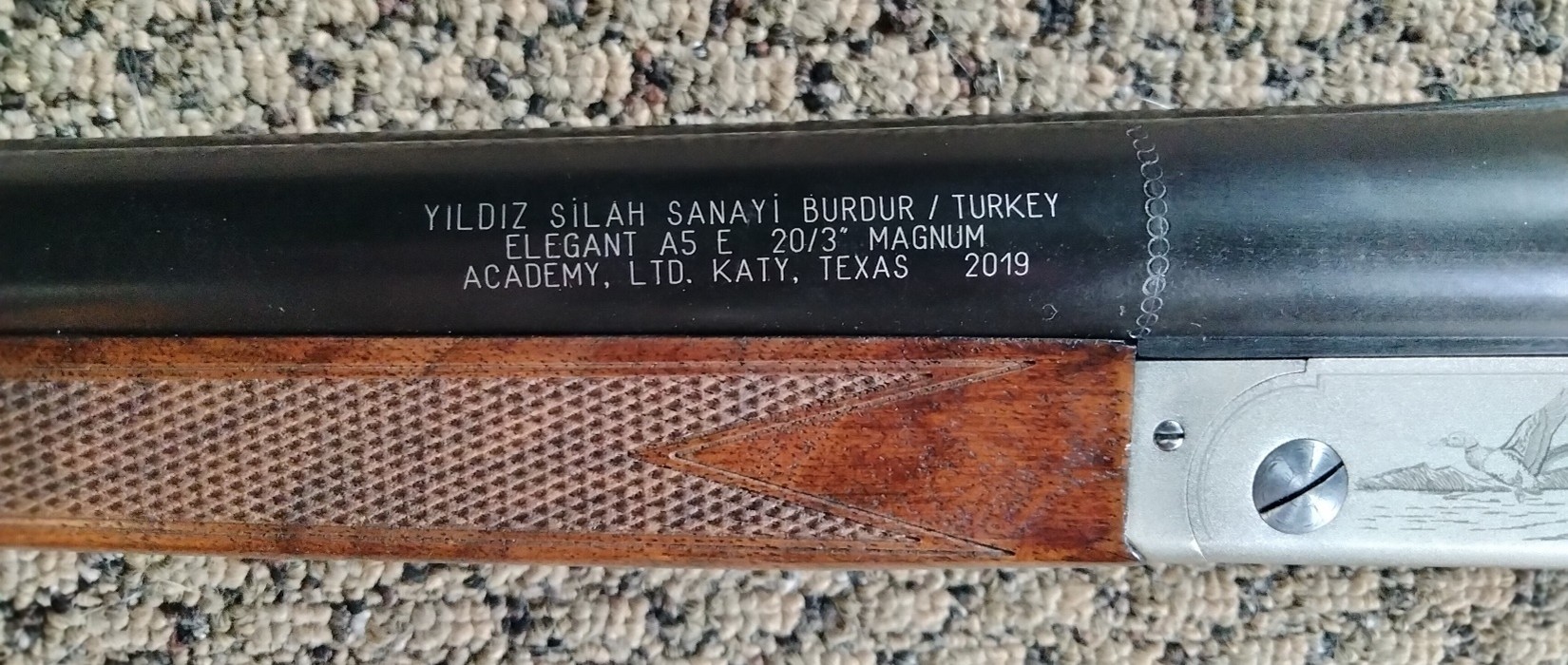
Recently, I picked up a double barreled 20-gauge Yildiz shotgun that was made in Turkey. I ordered a couple of choke tubes from Tru-choke. One is an Improved Modified I intend to use with the #4 buckshot loads I have made. The other is a Skeet II tube which measures .001″ of an inch smaller than my cast round balls. I was hoping this would be the ticket for accuracy with the round balls. I was not disappointed!
oplus_0
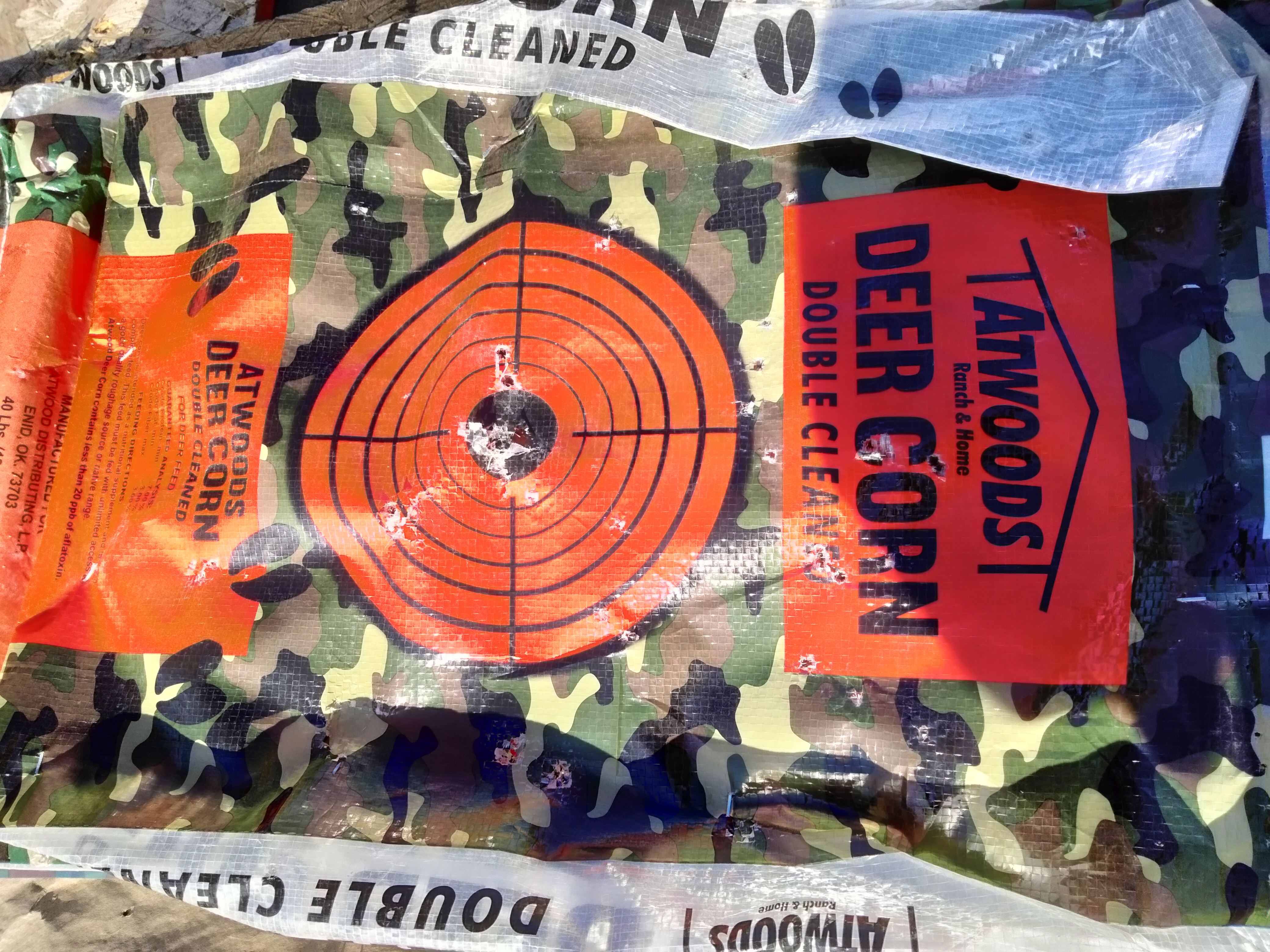
My first shot at 25 yards hit the black bullseye and my next two shots dropped right in on top of the first one. I was shooting from the bench with only a front bead and firing from the left-hand barrel.
oplus_0
The smaller holes you see in the target are from a load of #4 buckshot I fired from the right-hand barrel through the Improved Modified choke.
These loads should work fine for hogs and deer at close range. I’m planning to do some more shooting at longer distances to see what kind of accuracy range I will have with this combination.
I picked this book up today at the thrift store and found the author had written a nice sentiment on the inside cover. I thought I would share it with you. The book was originally published in 1895. This is probably a later edition but the author died about 1930. So it’s still 100 years old.
Artaban the Medean was a Magi. While on his way to meet the others, he stopped to help an old man and missed the caravan. He had to spend one of his 3 jewels for camels and supplies to go to Bethlehem. Upon arrival he finds Joseph has left for Egypt with his family. As the soldiers come to kill all the children under 2 years of age, he uses the second of his 3 jewels to bribe them to pass the house of the woman who has given him food and shelter. Doing so saves her baby. He traveled to Egypt and spent 33 years searching for the King of the Jews. Upon visiting Jerusalem for the last time he learned that Jesus of Nazareth is being crucified. As he is going to Golgotha to attempt to ransom his life with the last of his jewels, a pearl of great price, he is approached by a girl who is being sold into slavery because of her late fathers debts. He gives the pearl to her so she can pay the debts and buy her freedom. During the earthquake when Christ died Artaban is hit in the head with a falling roof tile. Before he dies, he hears God tell him that whatever he did for the least of these, you have done to Me. In the end, the other wise man found his King.
Even if you’re the kind of person who always returns your grocery cart. Or makes a batch of homemade soup for a sick friend. Or always calls your aging grandmother back.
Because you’re still going to be too much for some people. Or not enough for others. It’s just the way it is.You’ll be too loud. Too emotional. Too sensitive. Too intense. Too extroverted. Too introverted. Too needy. Too this or that.
You can work your butt off to be well-liked. And it still won’t be enough. But just remember, you are enough. Just the way you are. Let’s stop trying so hard to be well-liked by everyone. And start living!
Live boldly walking along the sides of those who already embrace you—the YOU you were born to be. There are people in your life right now who care about who you are on the inside and what you represent on the outside. They don’t need you to be perfect.
They don’t care if you wear the same black yoga pants every day with the same cardigan sweater and top knot. They just want you, all of you, just the way you are today.
So, it’s true. Not everyone’s going to like you even when you try your hardest to do all of the things.
At some point while cruising social media you’ve read a post made by someone proclaiming they were “red flagged” and the cops “stole their guns.” The term “red flagged” has become an adjective for any instance of seizure of firearms by police. Some people say that the police have no reason to take a firearm from anyone for any reason and that any seizure is an “infringement.”
So why would the police take a firearm from someone? We asked officers what instigated the seizure of firearms by police and we bring those reasons here to you. Here you will find this easy to follow list of how to keep your gun from getting seized by the police.
Don’t Drive Drunk While Armed: Driving drunk while armed is one of the biggest reasons why a gun is seized by the police. You’ll get your gun back when you sober up, but you can’t take your gun to jail with you. Some people fully expect that their gun should go with them, but that is just not going to happen.
Even police officers can’t take their gun into a jail, so why would yours come too? Jails are ultra secure facilities. Inmates have rubber like pens so that they can’t be used as stabbing instruments and other everyday items are reconfigured so that they can’t be used as weapons.
You’re gun also can’t be left in your car. In fact, most agencies require officers to remove all valuable items from a car and to be booked into the property room at headquarters so that it isn’t stolen. For these reasons, your gun will be booked at the police station and you can pick it up in the morning.
Don’t Beat Your Wife: No one should lay a hand on their wife (or husband) in anger. If you do, you are going to be arrested for domestic violence. In some cases, the police may seize your gun(s) because it was used in conjunction with the crime. Many times I have had an abuser tell their victim that they were going to shoot them. If you say that after beating them, why would the police leave that gun behind? Expect it to be seized. You’ll have to go to court and then the judge will make a decision on whether you will get them back or not. Judicial review is a cornerstone of the constitution. You can’t cry that your rights were violated when you beat your wife, threatened to shoot her, and then had judicial review on what will happen with those guns. The constitution was followed and you just didn’t like the decision. If you’re not guilty or the judge shows pitty, you’ll get them back.
Don’t Threaten to Shoot Yourself: Another big reason the police seize firearms are for people in crisis. When I say crisis, I mean people threatening to shoot themselves. If you have a gun and are telling people you are going to shoot yourself, your gun is going to be seized and then a judge will make a decision on when you get it back. It makes sense, right? If you had a knife and threatened to slash your wrists, the police will take your knife. If you threaten to hang yourself and have a rope, the police will take that too. Do you see a trend? There is no constitutional crisis and is all done within the law. Could you imagine if an officer left the gun behind? There would hell to be paid in the press if they turned the gun on themselves or on others.
Don’t Do a Gang Related Drive By: In fact, don’t commit any crime while armed. If you commit a crime where a firearm is used, the gun will be taken as evidence just like if you used a knife or any other weapon. You won’t get it back if you are found guilty.
Don’t Leave Your SBR In the Motel Room in California: One of the best replies I got on a post asking for cops to tell me why they seized guns came from a California cop. Short Barreled Rifles (SBR’s) are prohibited and a felony to possess in CA. A hotel called and said that they found a rifle in a hotel room that was vacated that morning. It turns out that the SBR belonged to a reputable manufacturer that was a salesman for the company. They just returned it nicely back to the salesman. Just to make a note, the officers could get in a lot of trouble for doing that, but like most cops they don’t agree with these laws and they did the right thing. Stuff like this happens daily, but obviously never gets reported.
Don’t Poach: If you are poaching deer and get caught, your gun will be seized. Why? It’s an implement of the crime and is evidence. Just like any other implement of a crime, it is taken into evidence to be used in court. Like any other implement, the judge will make a decision on what will happen with that firearm.
Wrapping Up Seizure of Firearms by Police: As you can see, the Seizure of Firearms by Police occurs in instances that are totally avoidable. The most common seizure of firearms by police occurs with crimes involving alcohol. If you go out drinking, you shouldn’t be carrying concealed. In some states that may be completely legal, but common sense needs to come into play. My favorite saying in these instances goes like this; “There’s no law saying you can’t piss in an elevator, but we all know we shouldn’t do it.” An ounce of common sense goes a long way.







 Gabe the Shootist
 Gabe the Shootist